
Reflections on “The Art of Being Creatures” Gathering
By Anika Reynar
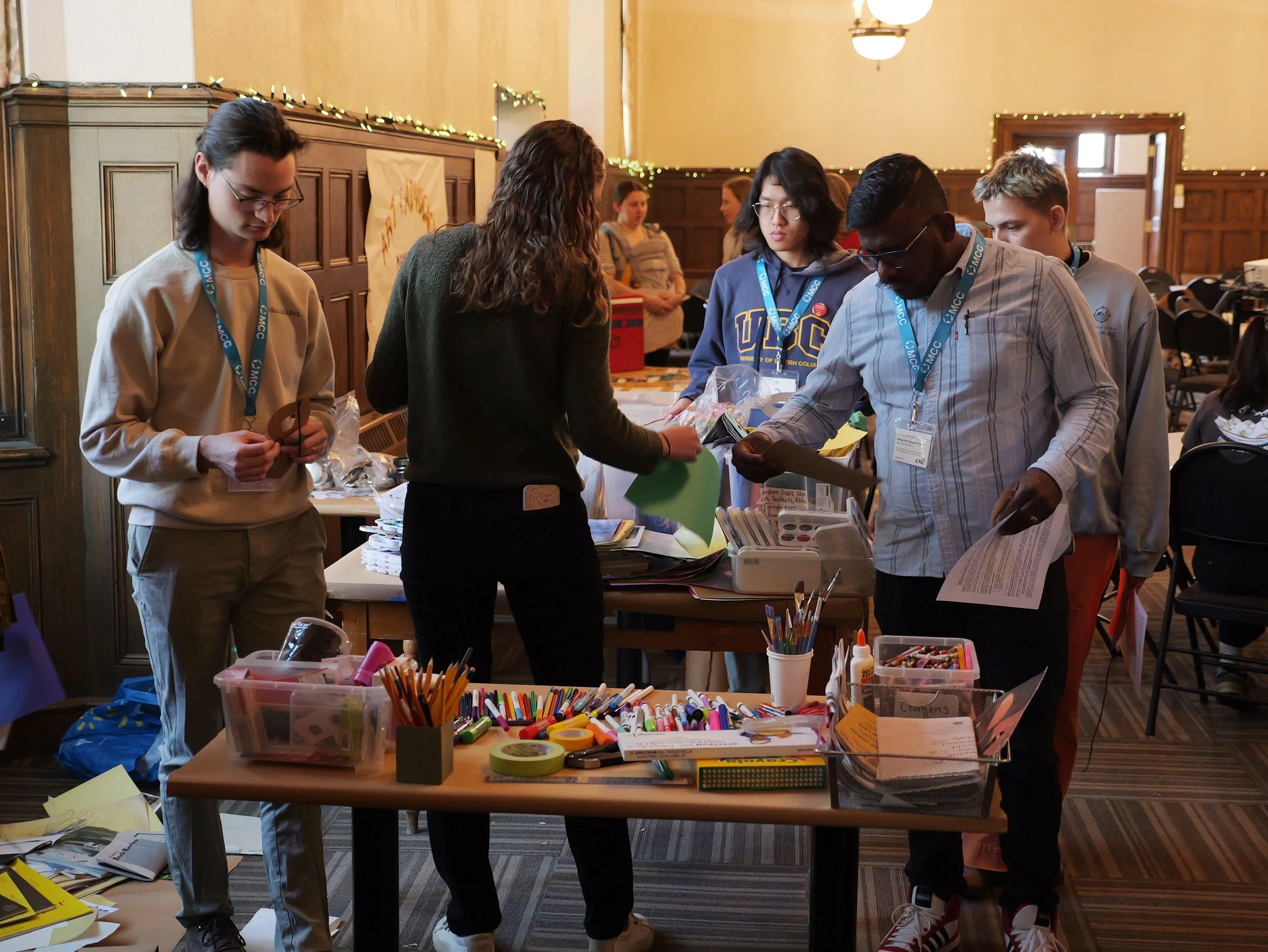
Gathering participants craft masks as part of an art-based reflection activity.
Note: This is the text of a spoken reflection Anika shared with participants at the final session of the gathering.
On the first evening of the Art of Being Creatures, we introduced ourselves to one another as creatures. I chose the Black-throated Green Warbler, a small bird that migrates from central Alberta, through Manitoba, down the east coast of the United States and into Mexico. My own migration pattern follows a similar line, between Massachusetts, where I live and work, and Manitoba and Alberta, where my family lives. These northern places are my homing grounds.
We then named causes and impacts of climate change that cause us grief, and clustered with others who named similar things: habitat loss, forced migration, extraction, greed, disconnection.
To my ears, disconnection and connection became the themes of the weekend. I think of disconnection as the forces that rupture relationships and keep beings stuck in isolated ways of being. Disconnection is at the root of many of our cultural, ecological, and bodily illnesses: borders that separate neighbors and families, dams that block sturgeon’s migration, and economic scarcity that pushes people to migrate, join the military, or turn inward and away from community to shore up their own security. We know these ways of being do not serve our thriving. But it becomes so difficult to imagine another way.
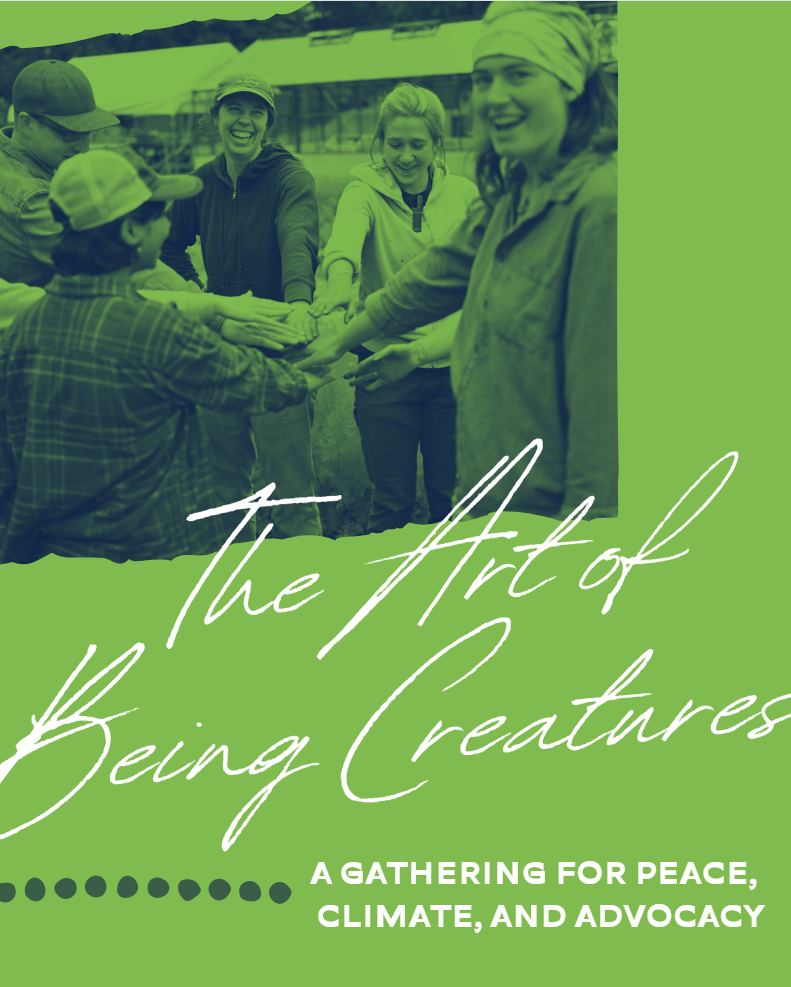
ACC and other Anabaptist partners brought young adults and representatives from Anabaptist organizations from the US & Canada together for a peace, climate and advocacy gathering October 30 - November 1, 2026 at Canadian Mennonite University, Winnipeg, Manitoba, Canada.
While I use the word “we” to speak of those gathered this weekend, we were reminded that there is no universal we. Annalee Giesbrecht (MCC) offered us a proverb from Haiti: “Two people get wet in the rain, but one gets wetter than the other.” Cree Elder Vince Solomon reminded us that climate change intensifies colonial harms that disproportionately impact Indigenous peoples, waging “a quiet structural violence against a people's way of life.” These structures of violence are working exactly as designed: disconnecting people from land, from one another, and from the more than human world. These forces turn beings into things to be sold.
We named how we feel these violences in our bodies, as grief, sorrow and anger in our stomachs, limbs and chests – a signal that all is not well. These feelings can become lodged in us, keeping us stuck. And yet, they can also mobilize us, turning us toward one another to reconnect all that has been disconnected.
To do this work, we need a sense of where we are going. I heard us naming our hopes through our definitions of peace. Two definitions stayed with me: “Peace is freedom for creativity and time to pay attention,” and “Peace is right relations.”
This weekend, we practiced paying attention and exercised our creativity to nurture connected ecosystems where all beings have freedom to thrive. We traveled across borders to arrive in the same place. We moved and shook our bodies, allowing hurt and grief to flow through us. We made art, wrote and sang songs, and listened to the witness of those living closest to the wounds of climate change. In each movement, we practiced building the trust required to become vulnerable – to become creaturely – and in doing so, to reweave our social fabric.
These practices were less about the outcome than the process. As members of Sembrandopaz in Colombia reminded us, a tree planting day happens only when a whole community is organized.
Two ingredients stand out to me in thinking about effective organizing: joy and generative conflict.
Joining with others is joyful! In a workshop on active transit activism, we were reminded that it is worthwhile to connect with people already “convinced,” because joyful connection builds trust and the capacity to say yes to other risky actions.
Conflict is part of the risk. I think of ten towns I am working with who are negotiating how to share water in a basin that is running dry. For a year and a half, we made little progress. Only when the towns began to disagree openly did productive paths appear. Friction opened possibilities previously unrecognized.
Joy and generative conflict are ingredients on the way to peace, where all beings have freedom for creativity and time to pay attention. To put it theologically, this is a two-kingdom practice, lived in the already and the not yet. My hope for those who gathered is this: when you or your community begins to feel stuck, treat it as an invitation to care and attention, rather than a barrier. Let it lead to connection rather than isolation, so others can join in the problem-solving, the creativity, and the recognition of possibilities.
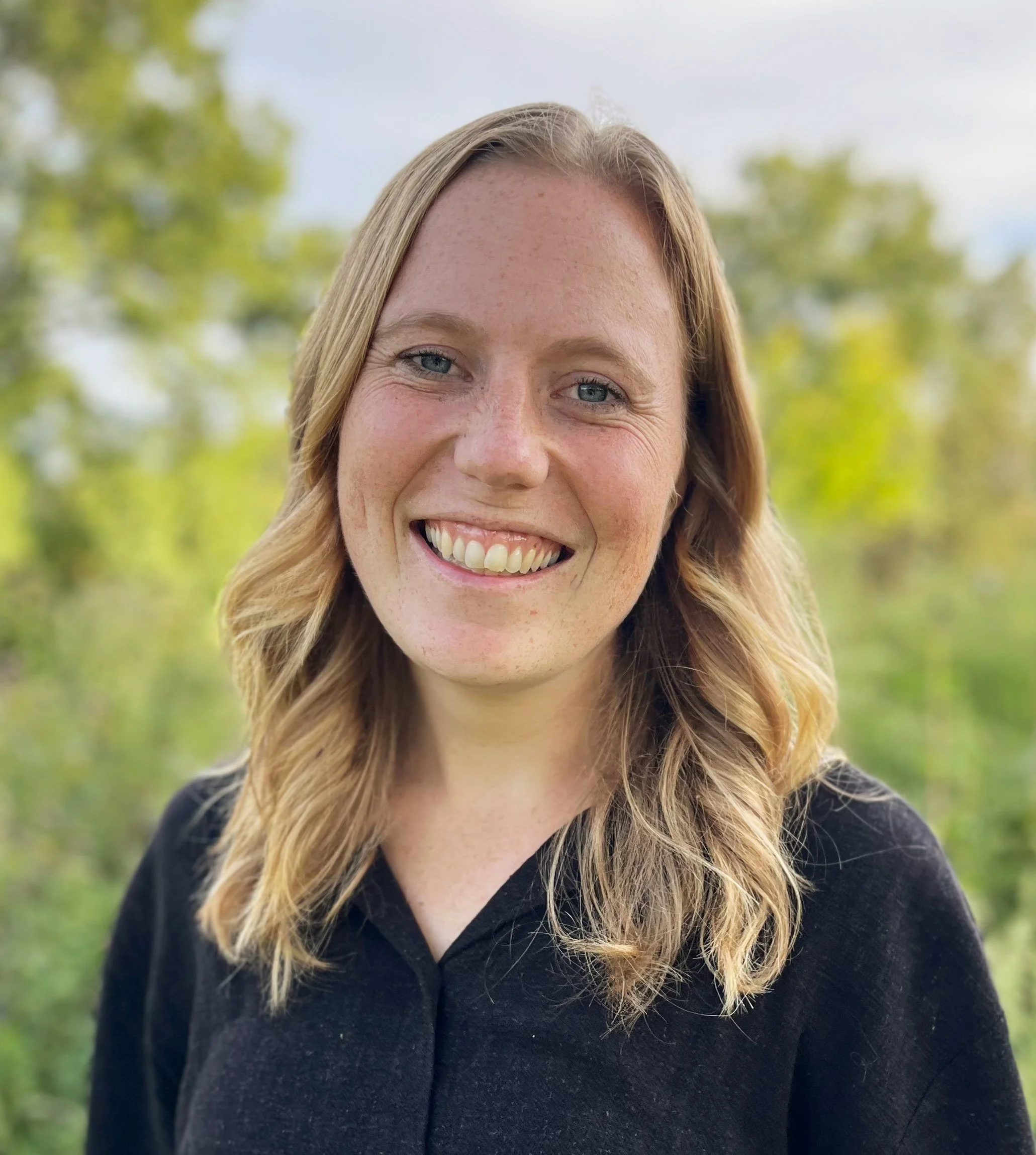
Anika Reynar is a board member of Anabaptist Climate Collaborative.
